
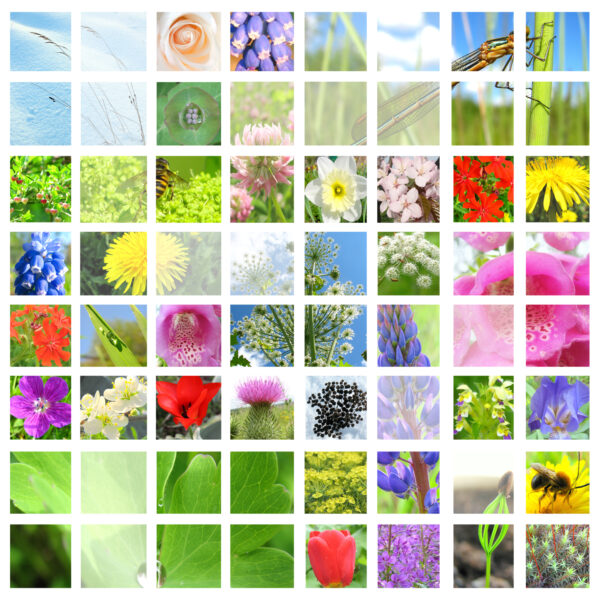
In nature, the most resilient ecosystems aren’t the ones with the biggest predators or tallest trees — they’re the ones with the greatest biodiversity. A rainforest thrives not because of one dominant species, but because of many diverse, interconnected organisms, each playing a role in the system’s survival and renewal.
Business works the same way.
If your company relies on one product, one customer type, or one channel — you’re exposed. But when you intentionally diversify — your offers, team, ideas, partnerships, income streams — you create the conditions for adaptive, resilient growth.
Let’s explore how biodiversity principles can future-proof your business and unlock new layers of creative opportunity.
What Is Business Biodiversity?
In ecological terms, biodiversity means the variety of life in a given system.
In business terms, it’s the variety of:
- People (backgrounds, perspectives, skillsets)
- Products (offers, services, packages, pricing models)
- Customers (niches, geographies, personas)
- Ideas (approaches to solving problems)
- Channels (marketing, sales, communication, delivery)
The more interconnected diversity you build, the stronger your system becomes — not just in boom times, but when things break or shift.
Why Business Biodiversity Beats Business Monoculture
| Business Monoculture | Business Biodiversity |
|---|---|
| Relies on one product or audience | Offers value across multiple formats |
| Scales fast but breaks easily | Evolves with the market |
| Optimizes for control | Optimizes for learning and agility |
| Is efficient | Is adaptive |
Monocultures are efficient — until conditions change.
Biodiverse businesses are messier but stronger in the long run.
5 Ways to Build Biodiversity Into Your Business
1. Diversify Your Offers
Think beyond “one signature product.”
- Add tiered versions (basic, pro, VIP)
- Bundle services into new formats
- Offer evergreen and live versions
- Experiment with low-lift digital products
Tool: Gumroad – Sell variations of digital products easily
Tool: Notion – Build modular templates and systems
2. Expand Your Audience Species
Serve multiple “customer species” without diluting your core.
- Start with niche #1 — master it
- Then find adjacent niches with similar needs but new perspectives
- Adjust tone, examples, or use cases accordingly
Ex: A designer serving coaches expands to consultants, then SaaS startups
Tool: Typeform – Run micro-surveys to discover adjacent needs
3. Encourage Team Diversity (and Cross-Pollination)
Hire and collaborate with people from different:
- Industries
- Cultures
- Age groups
- Educational backgrounds
Create intentional collisions: let your coder talk to your copywriter. Let your intern teach your CEO something new.
Tool: Slack + Donut – Facilitate cross-functional coffee chats
4. Cross-Pollinate Channels
Don’t live on one platform.
- Repurpose content across formats (blog → podcast → email series)
- Experiment with partnerships, guest spots, offline experiences
- Mix evergreen and live channels: SEO, events, social, referral loops
Tool: Buffer – Manage and test multiple channels simply
5. Plant Seeds for Long-Term Growth
Ecosystems don’t just survive — they regenerate. Make time for:
- Internal R&D (what haven’t you tried yet?)
- Community-building (relationships over reach)
- Experimental offers (not optimized for profit, but for learning)
This creates the compost for future breakthroughs.
The Bonus: Resilience in Uncertainty
Biodiverse businesses:
- Lose less when trends shift
- Recover faster after setbacks
- Discover new growth areas through natural evolution
- Thrive even when their surroundings change
Real-World Examples of Business Biodiversity
| Brand | Their Biodiversity Strategy |
|---|---|
| Basecamp | Offers multiple products + books + cultural commentary |
| Marie Forleo | Mixes education, book sales, podcast, affiliate partnerships |
| Patagonia | Merges retail with activism, media, and repair services |
| Freelance studios | Combine design, strategy, community-building, and coaching |
Final Word: Diversity Isn’t Just Inclusion — It’s Infrastructure
True biodiversity in business isn’t just a value — it’s a design principle.
It’s how you build something that lasts, something that flexes and regenerates,
something that evolves with time rather than gets erased by it.
Because in business, as in nature:
The most powerful systems aren’t the biggest.
They’re the ones that adapt — and connect — the best.